

Note: Sales pricing in effect through September 9, 2025 at all four Oliver’s Market locations.
How to Cook Wagyu Steak
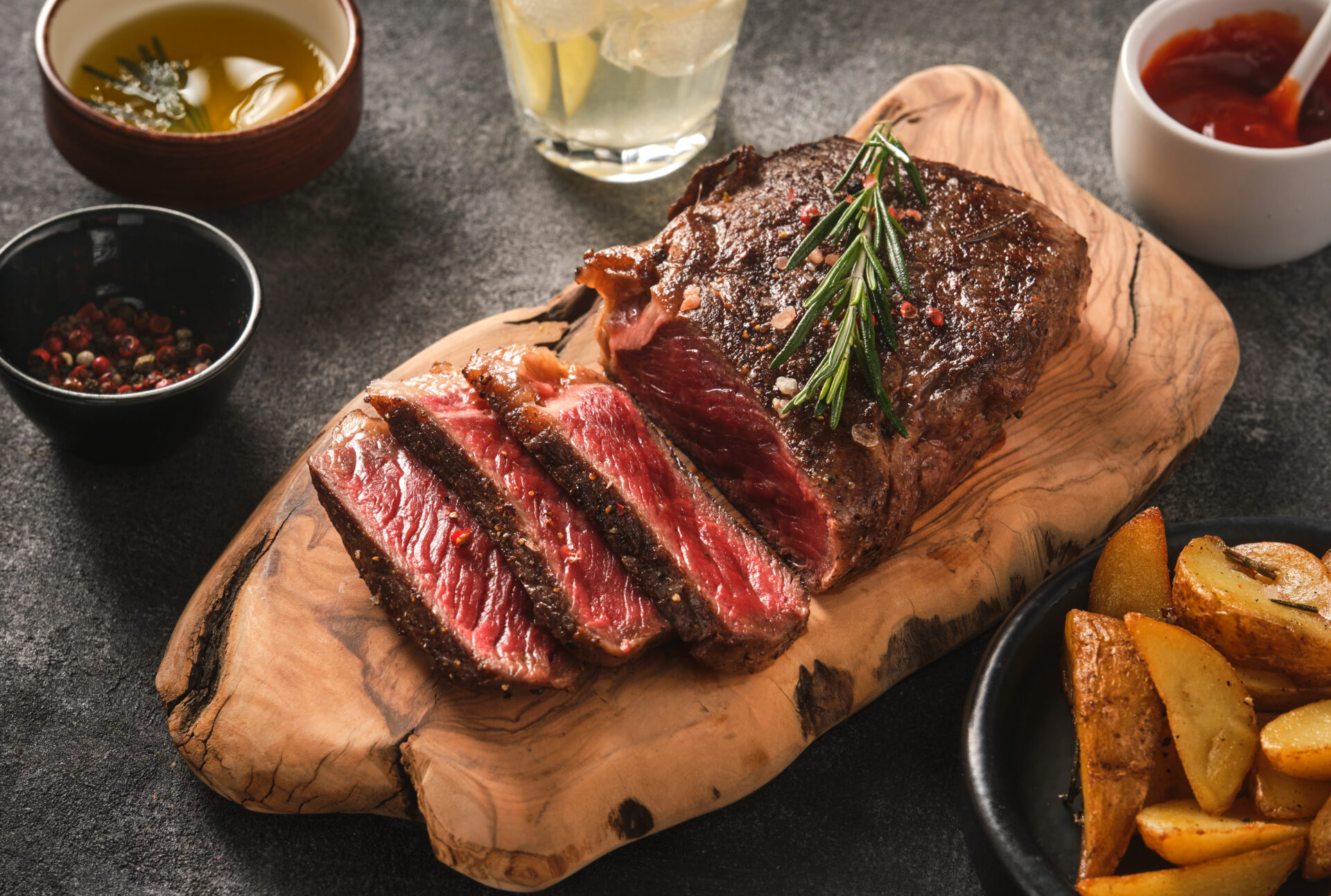
Want to know how to cook Wagyu steak like the pros? With its rich marbling and luxurious texture, Wagyu deserves special attention—and the right technique makes all the difference. Whether you’re preparing a steakhouse-style dinner at home or trying this prized cut for the first time, a few pro tips will help you get it just right.
Choosing the Right Cut
As anyone who has surveyed a meat counter knows, there are many different steak cuts. Steak is defined as “a thick cut of beef” which doesn’t narrow down your choices. The most popular cuts are the ones featured on steakhouse menus, and all come from the rib and loin sections of beef cattle.
These include:
- Ribeye – The ribeye is intensely marbled with a bold beefy flavor and tender texture. The ribeye has a center eye and an outer cap of ribeye separated by a swath of fat. Look for thick cut steaks with abundant flecks and streaks of marbling.
- Strip – A strip steak is highly marbled with excellent flavor and a slightly firm texture. Each steak has an external fat cap on one side and a large uniform section that is easy to slice and yields very little waste.
- Filet Mignon – Prized for its incredible tenderness and mild flavor, the filet mignon has a fine buttery texture that melts in your mouth. A boneless cut without a fat cap and light marbling, this steak has a mild beef flavor.
- Sirloin – Lean, flavorful, and a bit on the chewier side, sirloin is one of the most popular cuts for good reason. It’s more budget-friendly than the steaks listed above, making it a smart pick when you’re serving a crowd.
Preparing Wagyu Steak
Preparing American Wagyu steak starts well before it hits the heat. In the section below, we’ll walk through essential steps like thawing, seasoning, and bringing your steak to room temperature. Each one is designed to help you get the most out of your investment.
How to Properly Thaw Wagyu
Frozen steaks retain their quality when slowly thawed in a refrigerator. Set frozen steaks on a plate or rimmed pan to catch any drips and place in the refrigerator. Thin steaks will thaw overnight, and larger steaks may take 48 hours. Plan ahead and thaw slowly to maximize the quality of Wagyu steaks.
Meat scientists at Texas A&M have found that quickly freezing and slowly thawing beef has little to no impact on quality. At Snake River Farms, we use a blast freezer set to -20°F to reduce freezing time and minimize the formation of ice crystals, helping preserve the steak’s texture and flavor.
Should you Season Wagyu?
Wagyu beef possesses a rich flavor which is enhanced by simply seasoning with kosher salt. If preparing Wagyu for the first time, this is an excellent way to discover its unique flavor profile.
Even with its rich, beefy flavor, don’t hesitate to use your favorite seasonings and rubs. Personal preference plays a big role in finding the best way to season your Wagyu steak.
Bringing the Steak to Room Temperature
Many chefs and grill masters recommend letting a steak sit at room temperature so it will cook quickly and evenly. This is a tip that you’ll also find in many books and websites.
Kenji Lopez-Alt, James Beard award winning author of The Food Lab took the time to put this to the test and found resting at room temperature has little impact on the finished quality of a steak.
If you decide to let your steak sit at room temperature prior to cooking, we recommend about 30 minutes.
Cooking Methods for Wagyu Steak
Cooking Wagyu steak requires a thoughtful approach to highlight its exceptional marbling and flavor. Below, you’ll find three proven methods: pan searing, grilling, and sous vide. Each technique offers a unique way to bring out the best in your steak.
Pan-Seared Wagyu
This simple method sets an even, golden brown crust on a steak’s exterior and allows the option of adding flavor through the use of aromatics and butter-basting.
Best Pan to Use – A cast iron pan is the ideal tool for pan-searing steaks. A thick heavy pan holds heat for a long period of time and sears a steak quickly so the interior does not overcook.
Best Oil or Cooking Medium – A neutral vegetable oil is a good choice for pan-searing steaks. There are many sources that cite the benefits of Wagyu tallow which has a high smoke point and imparts additional flavor to the steak. It’s an excellent option if you have it on hand.
Pan-Searing Guide
Season: Heat a heavy skillet (cast iron is ideal) over medium heat until hot. Add a light coat of vegetable oil to the skillet. Season top side of steak with salt and pepper.
Sear: Place steak, seasoned side down, in skillet and sear 4 to 5 minutes until nicely browned. If the steak sticks to the skillet, it’s not ready to turn. Wait until it releases on its own.
Flip: Turn steak over and allow to cook for an additional 3 to 5 minutes. After 2 to 3 minutes, use a thermometer to test the thickest part of the steak. When the temperature reaches the desired level, remove from the skillet. Serve.
Grilling Wagyu
Grilling steak is a time-honored method, especially popular during the warmer months. Charcoal grilling, in particular, adds distinctive flavor and texture. While any cut can be grilled, thick steaks (at least 1 ½”) with more marbling such as ribeye or strip steak are preferred.
Use a 2-zone set-up with your grill. For charcoal, put all the hot coals on one side and leave the other side empty. This creates a hot side for searing and a cool side for bringing the steak to your preferred temperature. This also gives you a side to move the steak as melted fat hits the coals and flares.
Grilling Guide
- Generously season steak with kosher salt.
- Set up your grill with 2 cooking zones, leaving the vents open all the way.
- Place steaks on the cool side of the grill and close the lid. Flip the steaks and check their temperature every 3-4 minutes. The targets are 110°F for medium-rare or 120°F for medium.
- When the desired temperature is reached, move the steaks to the hot side of the grill to do a final sear. About 1 minute per side. It’s fine to flip the steaks again if you desire a deeper char.
- Remove the steaks and place on a cutting board. Rest 5 to 10 minutes. Serve.
If you would like to up your grilling game, check out Snake River Farms’ expert tips and guides to help you get the most out of your grill set-up HERE.
The TLDR Summary
Some quick rules of thumb for cooking and serving Wagyu Beef:
- PORTION SMALL: Wagyu is richer than other beef – a little goes a long way.
- BRING TO ROOM TEMP: Let rest on the counter for 30 minutes before cooking.
- SEASON SIMPLY: With this much flavor, salt and pepper are all you need.
- COOK MEDIUM-RARE: Best enjoyed at 125-130°F internal temp so the marbling melts.
- REST BEFORE SERVING: Let sit at least 5 minutes before slicing.
We hope that Snake River Farms American Wagyu Beef will find its way into your Labor Day Weekend plans. Using these tips and suggestions, your are destined for a delicious experience!
No comments yet. Add the first comment